

I can never wait for the month of December to arrive when my head fills with visions of decorated trees. If you think I am talking about Christmas trees, you are wrong. I am talking about palm tree tops filled with Great Blue Herons. You see each winter, Ritch Grissom Memorial Wetlands in Viera Florida is the scene for the Great Blue Heron Love Story that I am about to share with you.
Where is Ritch Grissom Memorial Wetlands?

Viera Wetlands is located just 2.5 miles west of I 95 in Central Florida at the Wickham Road exit making it an easy stop for those traveling I 95 through Florida.
About Ritch Grissom Memorial Wetlands
Ritch Grissom Memorial Wetlands, (Viera Wetlands), is a 200 acre wetland in Central Florida that is comprised of 4 cells and a central lake. Around all the cells and the central lake is a well packed dirt road that brings you mere feet from the birding action. This dirt road, once drivable, is currently open to pedestrian traffic only.
In fact I believe it is closed to all forms of motorized vehicles. For the lastest information I encourage you to check the Viera Wetlands website prior to any visit.
Hours: The wetlands are open from 7 A.M. to 7 P.M. every day.
Costs: The wetlands are free.
Best Time to Visit Viera Wetlands
From Mid November through late April, the wetlands fill with a wide variety of wading birds along with raptors, cranes and ducks making this my favorite time for a visit. However Viera is a great place to visit any time of year, especially in the morning and evening hours. The only time I do not suggest visiting is during the middle of the day during the summer months when all wildlife activity would be very sparce.
Now let’s go see a great blue heron love story in action.
Great Blue Herons of Viera Wetlands
Great Blue Herons choose Viera Wetlands as their annual nesting site due to the Wetlands abundance of food along with one of their favorite nesting sites; palm trees. Update– Many palm trees have died since this post was first written which has resulted in a decline in the number of great blue herons nesting at Viera in recent years.
Great Blue Heron Mating Behavior
The Great Blue Herons are one of the first birds to decorate the trees of Viera Wetlands although many other birds will soon join them. But this post is a Great Blue Heron Love Story so let’s now look at the various stages of great blue heron courtship.
For all you birding photographers who may be reading this, Viera is an amazing place to photograph all the various stages of the Great Blue Heron love story.
Great Blue Heron Nesting Sites
At Viera Wetlands, the heron courtship begins once the first males arrival and stake claims to prime palm tree tops around Viera’s ponds. The herons seem to prefer palm trees that are in the ponds for safety from predators coupled with easy access to fish. In many rookeries, Great Blue Herons will nest at the top of trees while other birds will nest lower in the trees.

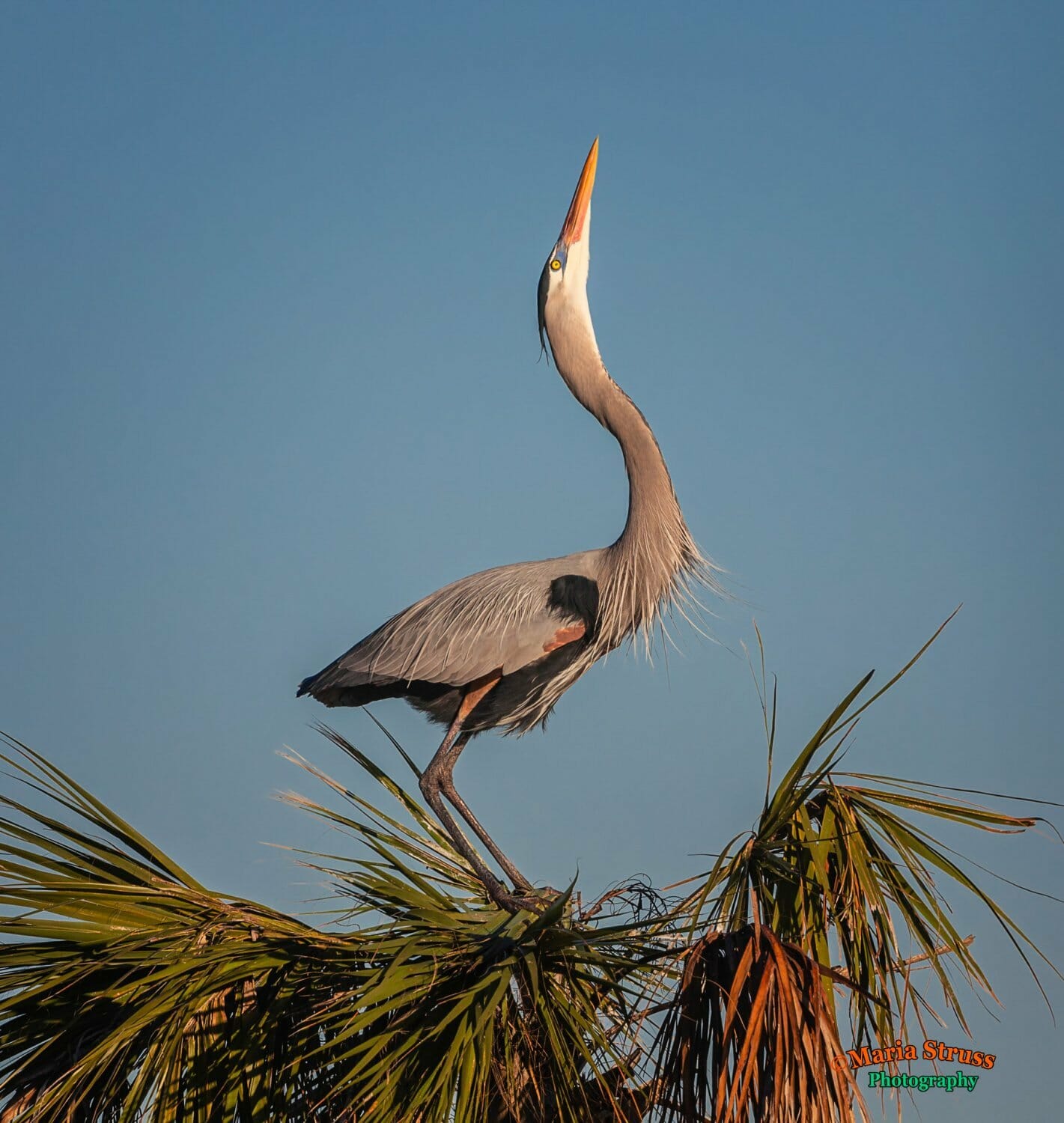
Male Heron Stretching to Attract Females
After the male great blue heron has picked a palm tree top for a potential nest site, he will begin stretching his neck in a stretch display to attract females. During this neck stretch he will bristle his feathers and extend his neck to an almost vertical position as seen below.
Male Herons Play Hard to Get
In ‘Heron Love” it appears the great blue heron male is the one to play hard to get. Responding to the male stretch, a female heron arrives at the nest but may be initially rebuffed by the male. Oh what I could add here but won’t.
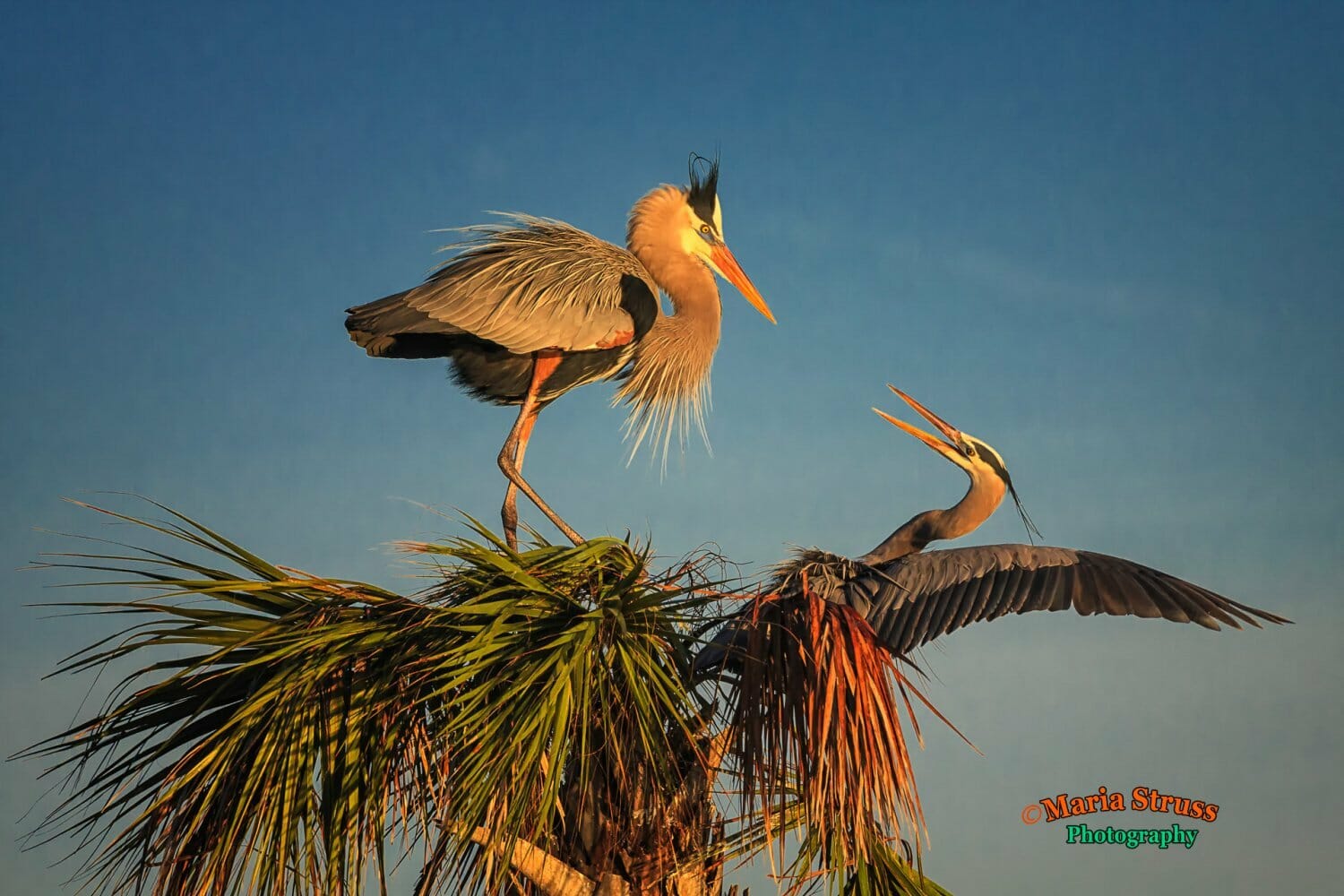
Also during this stretch phase while the herons are sizing each other up, they can be seen chasing each other around the nest site and even pushing the other one off the tree top.
All this frantic activity makes this a great time to photograph herons fights. Even though the picture below appears very static these heron fights are very fast and photographed at 1/2000 of a sec to avoid any motion blur.
Heron Love At Last
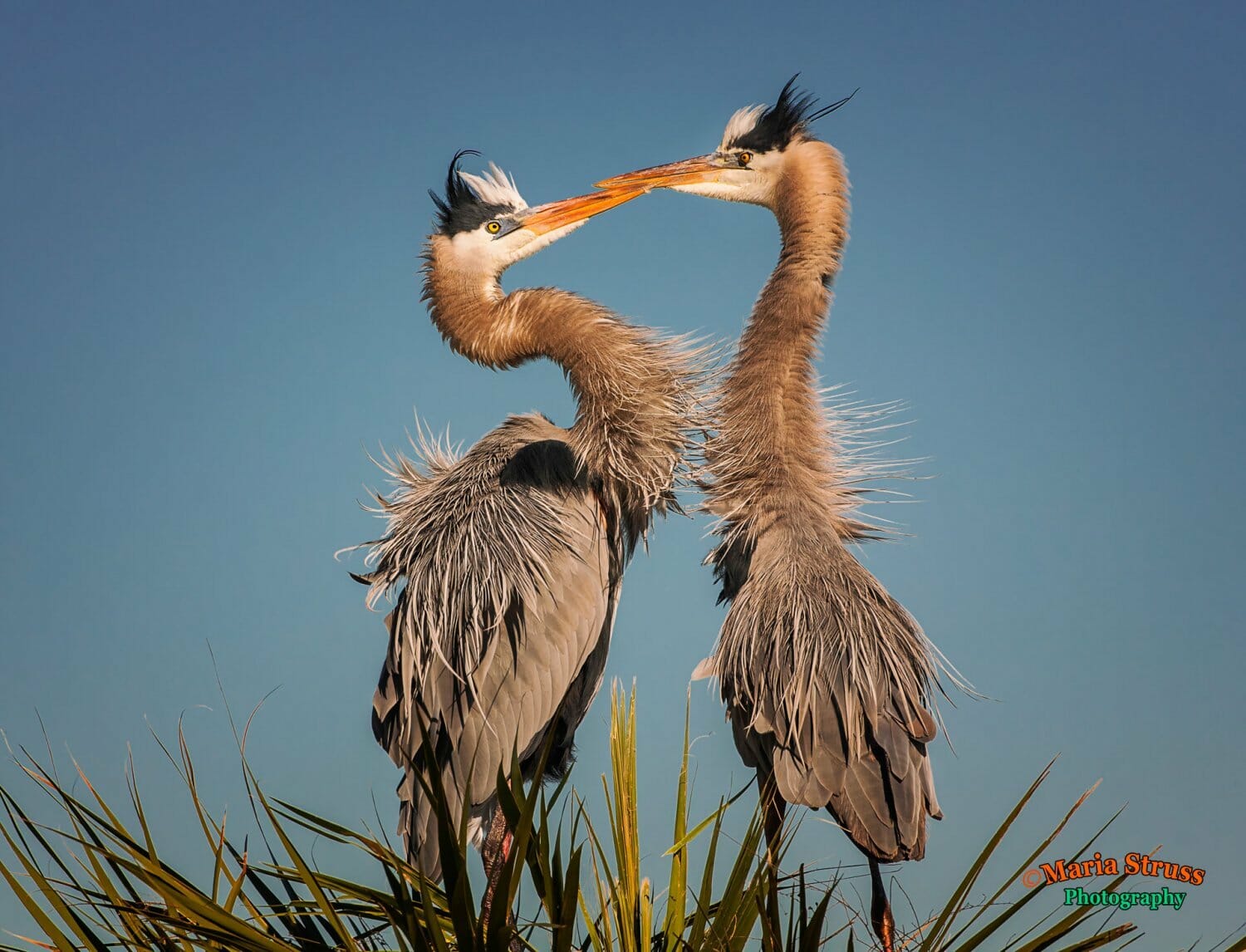
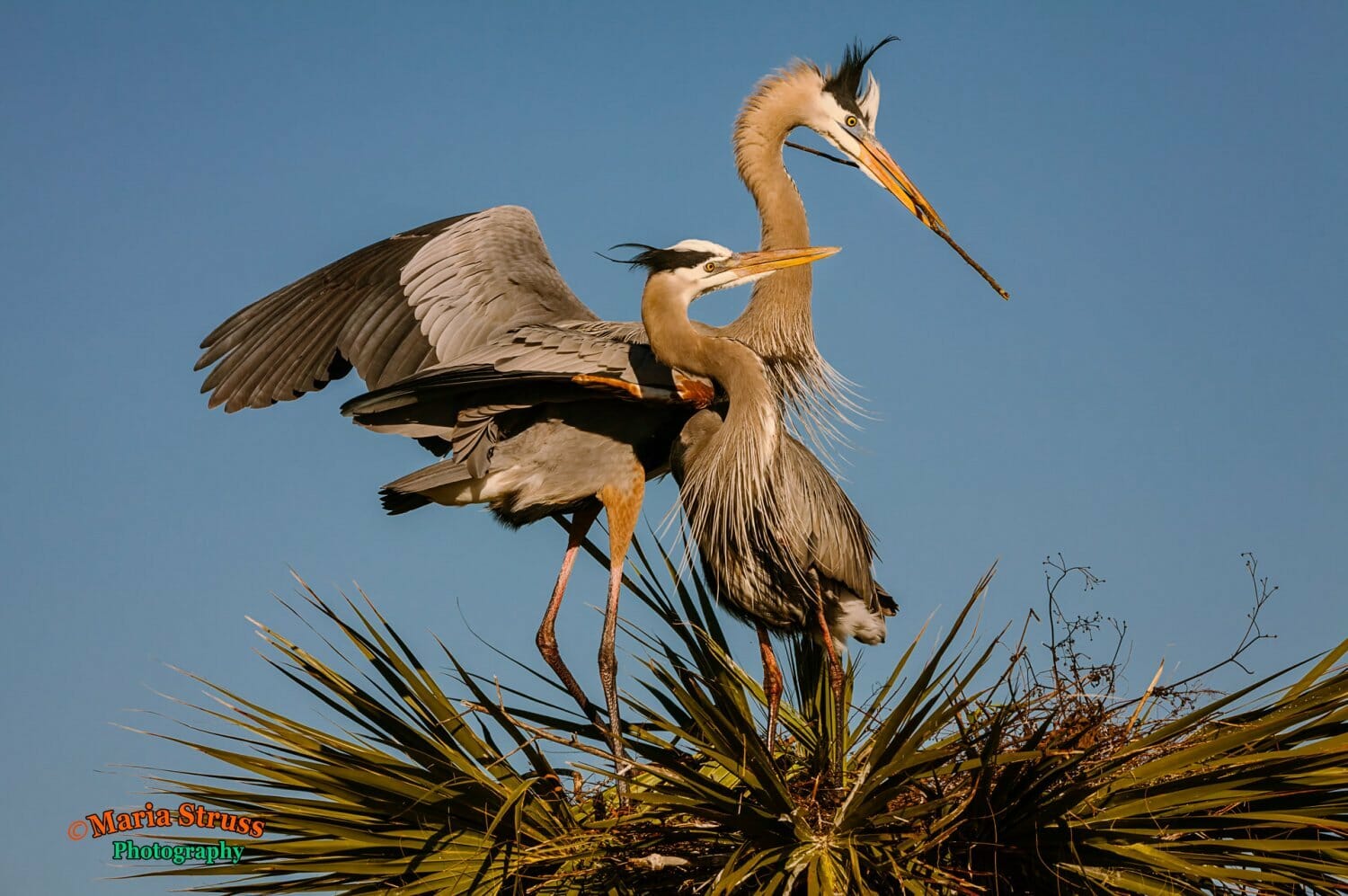
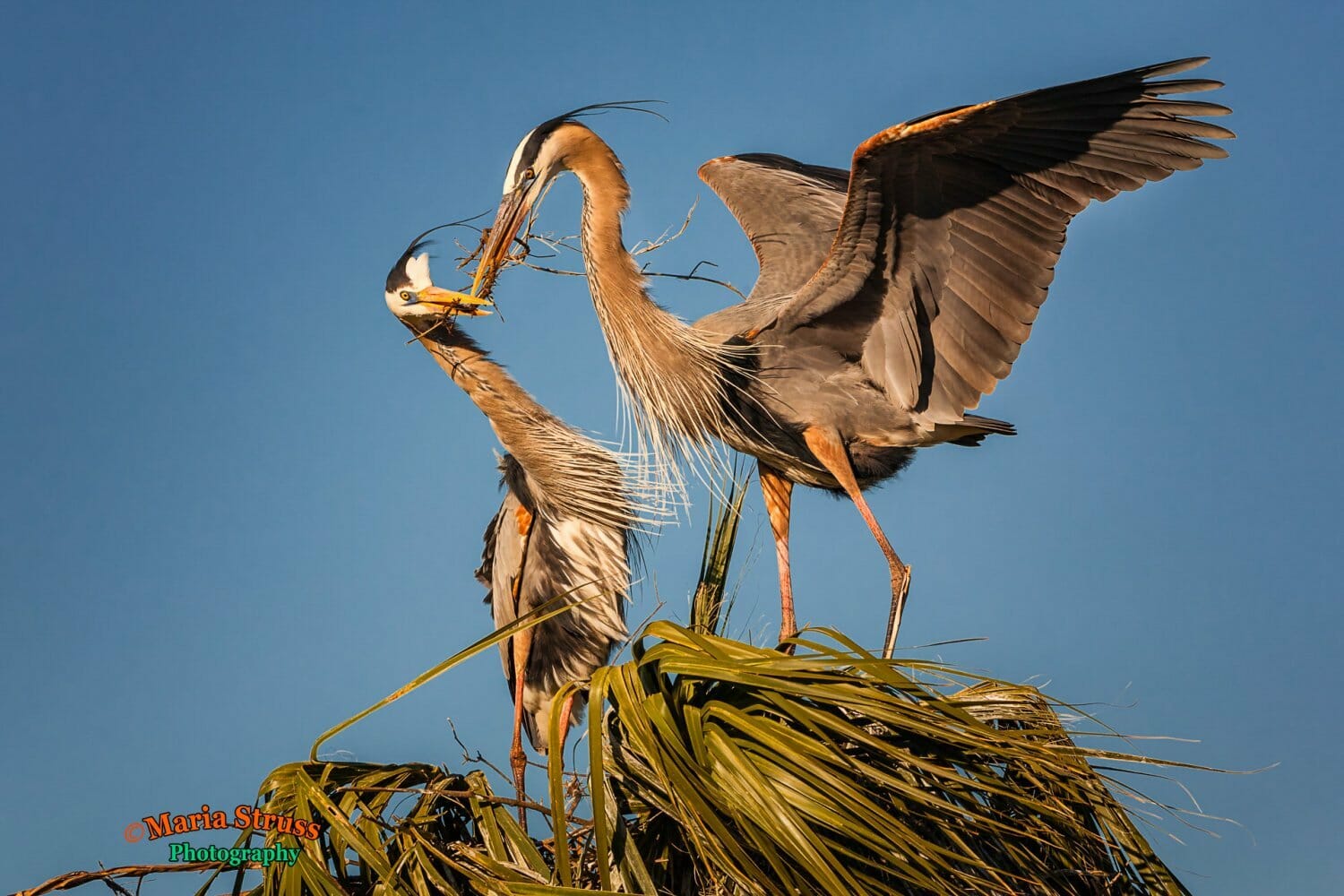
After several days of the above activity, the male begins to accept the female and love fills the air. It is at this stage of courtship that the great blue herons begin to engage in bill clapping which I call “Heron Kissing.” Yes, I know, I am straying from the scientific names but this is after all a “Great Blue Heron Love Story.”
This part of the courtship is my favorite part of their mating behavior. Not only is it amazing to witness but the beautiful shapes that occur during this phase make for great photography. In fact one of my favorite photographs from this action is when the herons beaks touch and their wings are extended such as in the second image below.
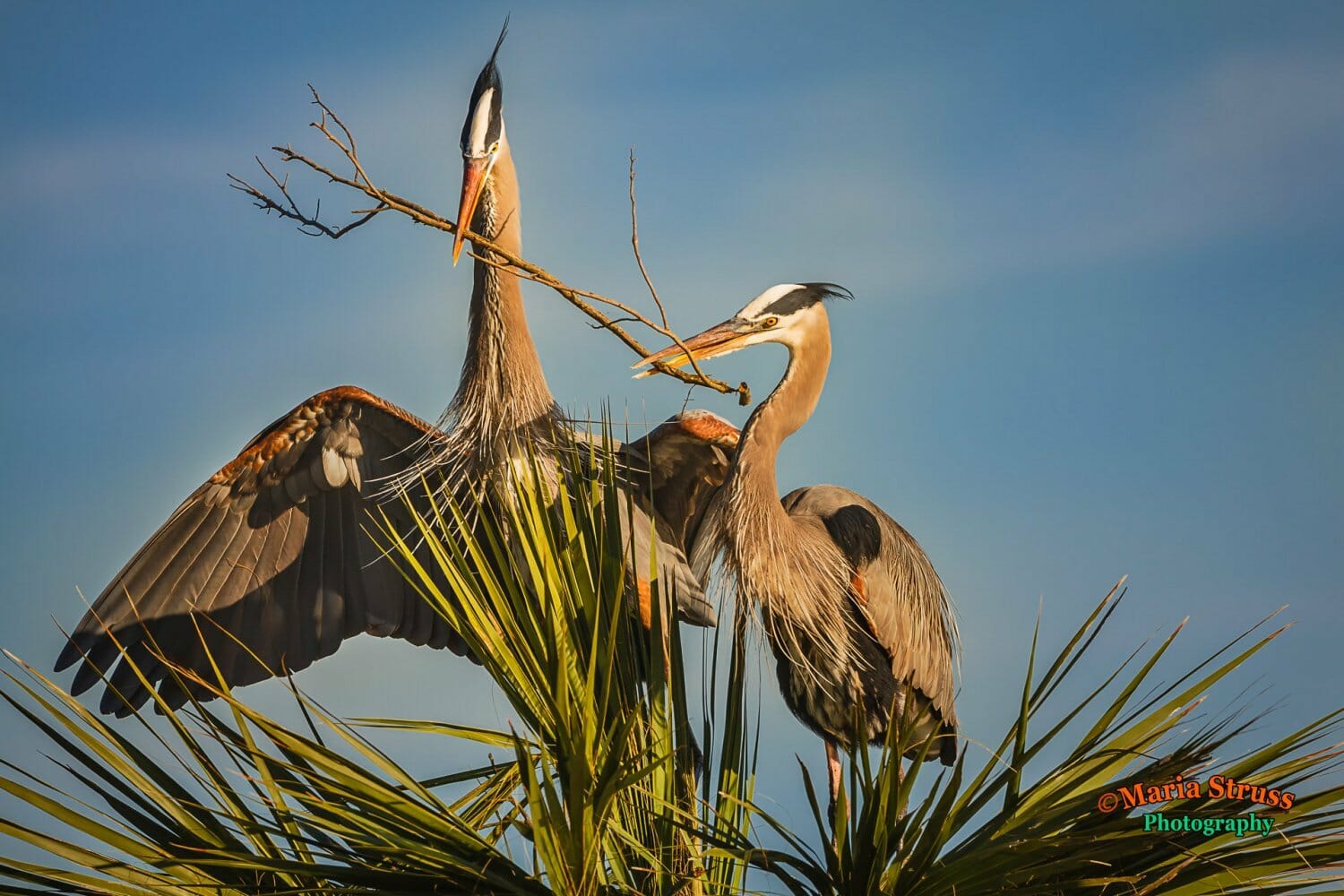
Even after bill clapping begins, the acceptance of the female by the male is not finalized until he brings her twigs for the nest.
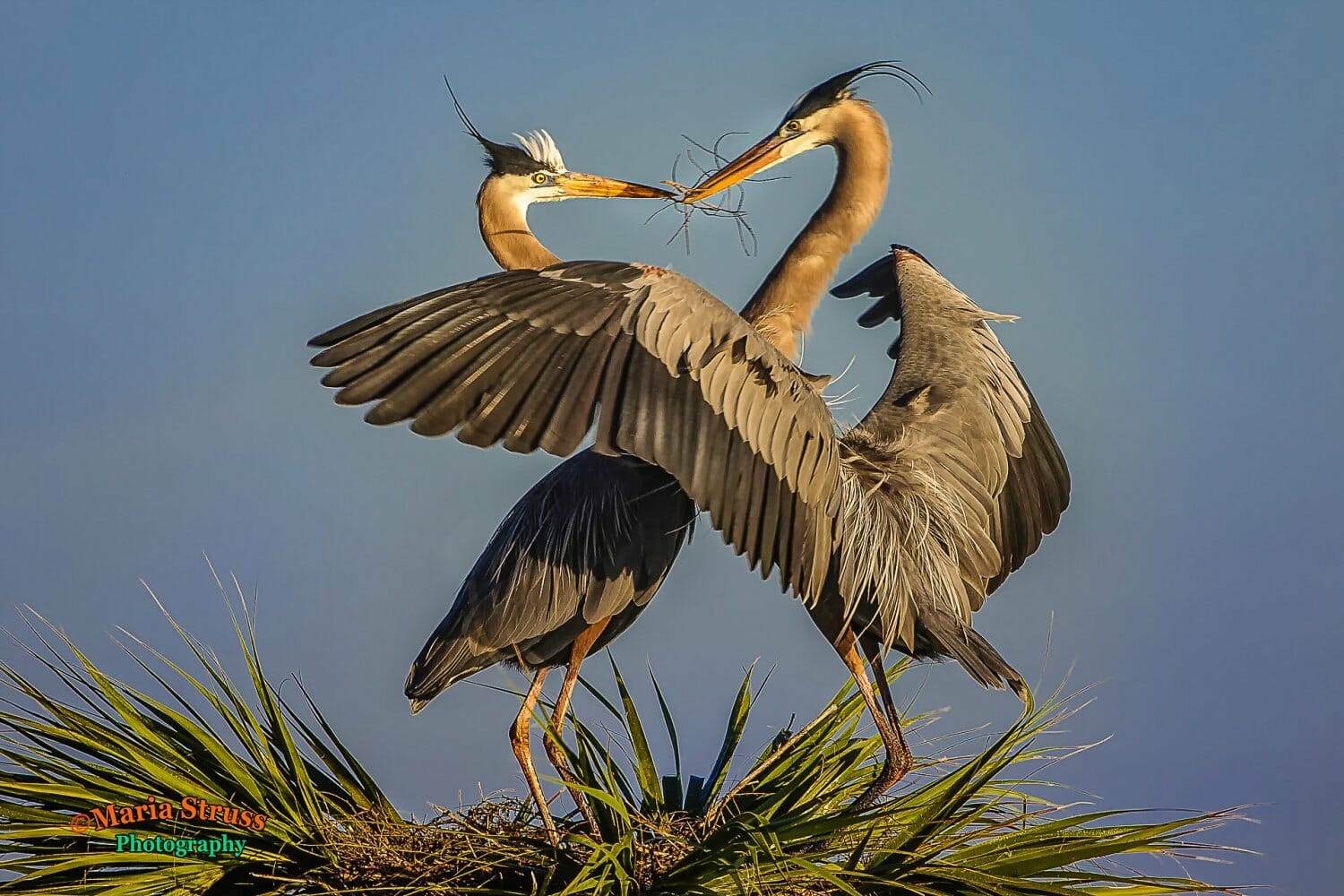
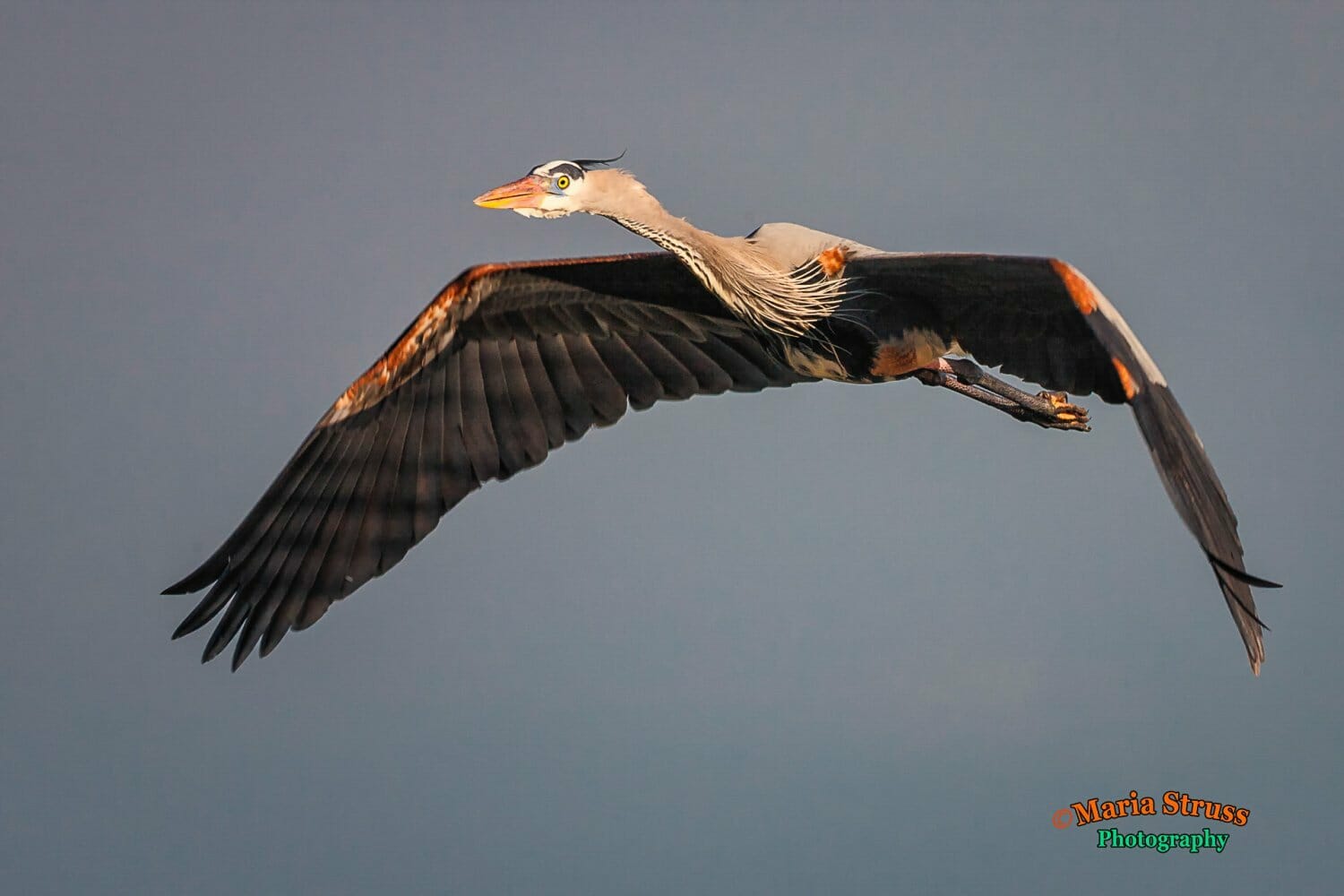
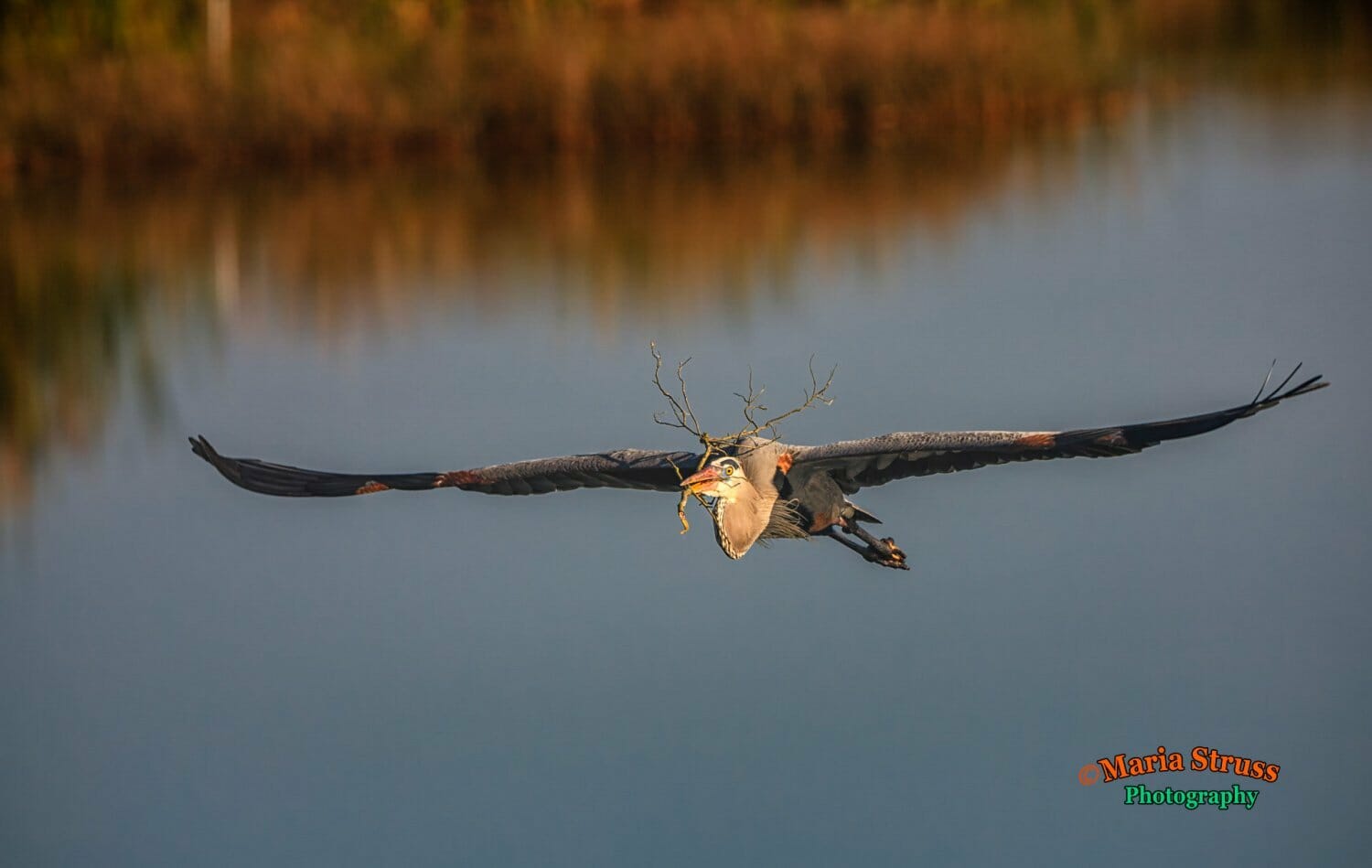
The male Great Blue Heron now begins to gather nesting material and for many days can be seen flying back and forth to the nest. This is a great time to practice flight shots as the herons will leave and come back to the same spot over and over again during the day.
Heading out
Returning to the nest
The female will inspect the nesting material and begin to assimilate it into the nest.
Great Blue Heron Mating
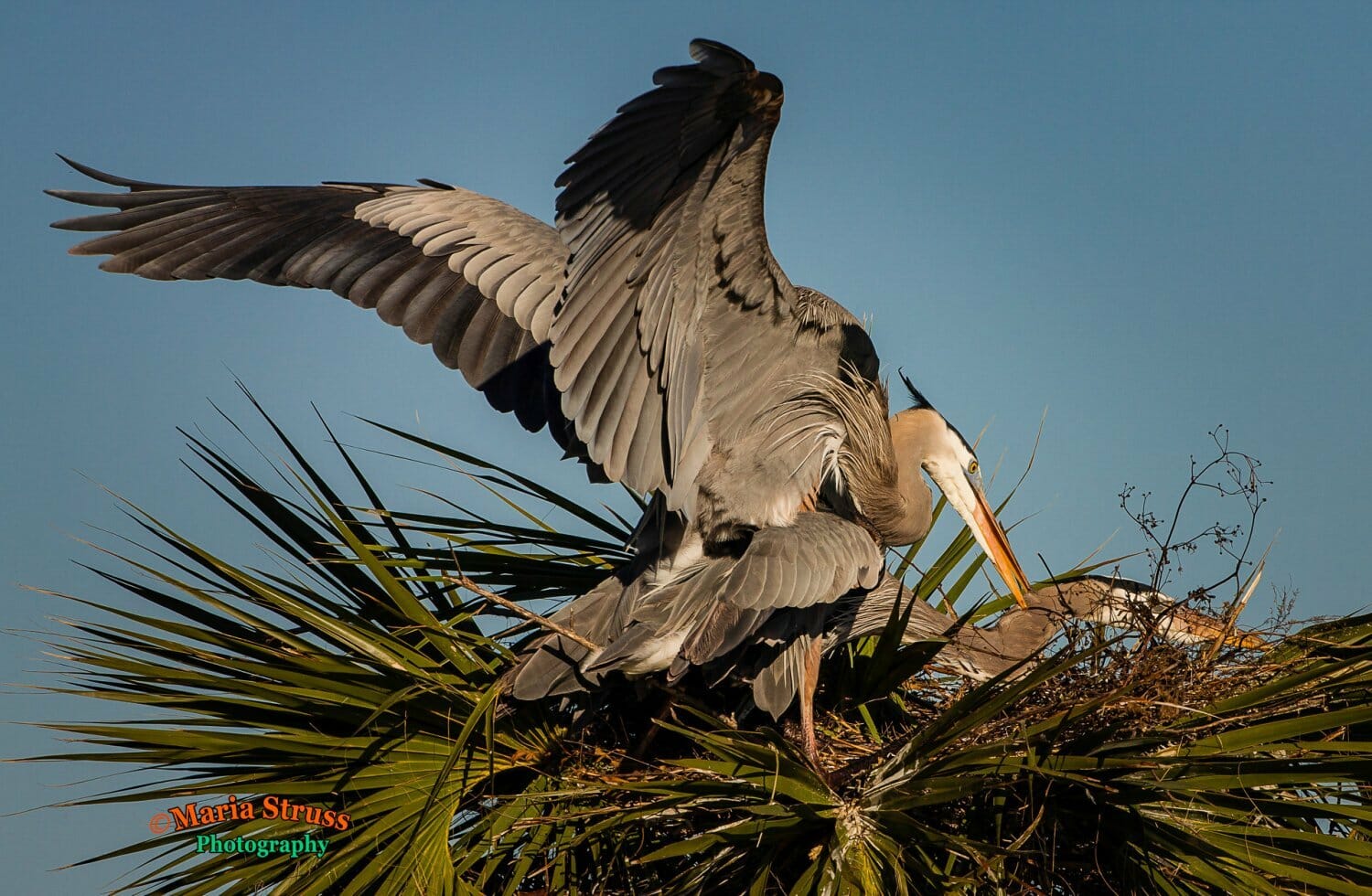
Once nest building is substantially complete, the actual mating begins. At this stage, it is common to observe a male fly into the nest with nesting material and mate with the female in a matter of a minute or less. As a photographer, anticipating this action is key to capturing the mating of the herons.
Final Thoughts on the Great Blue Herons of Viera
Every stage of Great Blue Heron courtship is an exhilarating experience to witness in person and especially wonderful as a photographer. The layout of Viera makes it such a special place to experience the heron mating behaviors as well as the mating rituals of many other birds.
In this post I only dealt with the courtship phase of the Great Blue Herons but would be remiss if I did not mention that Viera is also a great place to watch the great blue heron chicks grow up. As great as Viera is as a birding destination, it is also a good place to observe other wildlife and of course sunsets.
To learn about other Florida Birdings destinations please read about: Merritt Island and be sure to view my bird portfolio.
To that end, I wish everyone a wonderful time at Viera and hope you join on another upcoming photo road trip.
Related Posts
